
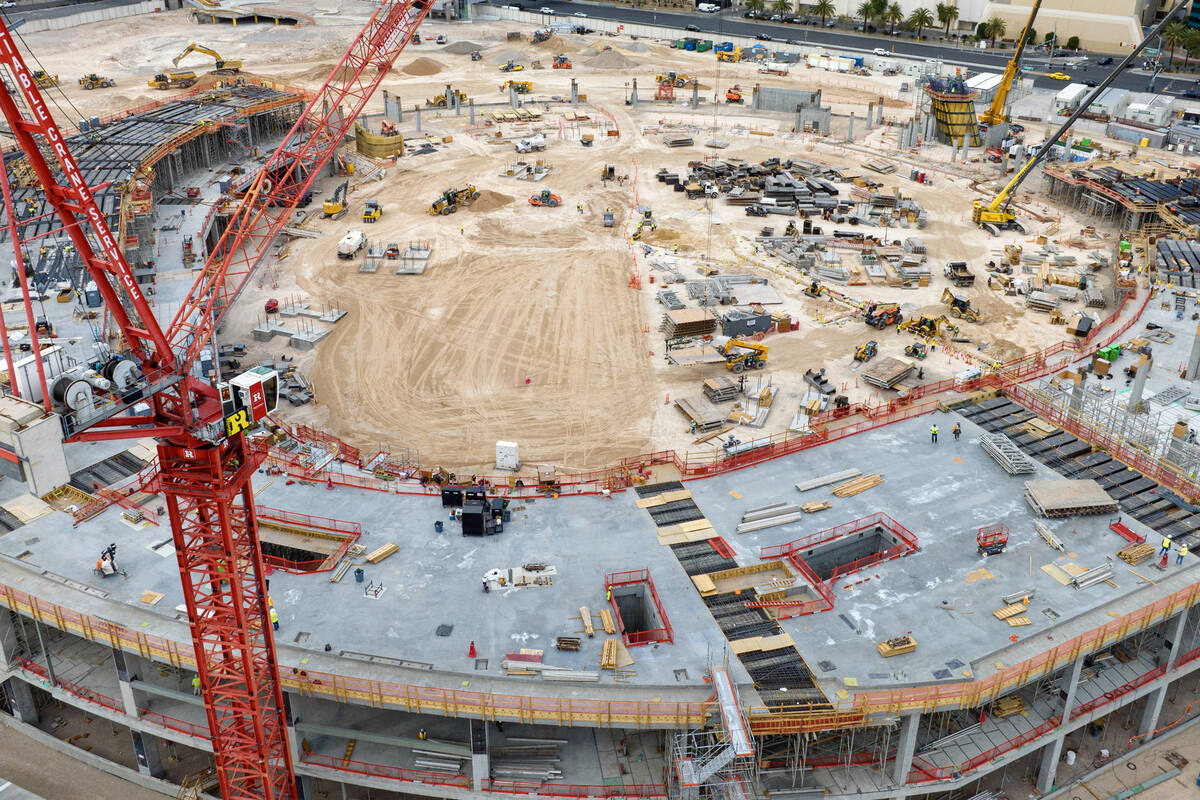

The much-anticipated Athletics’ $2 billion Las Vegas ballpark is making significant strides in its construction. With two out of the four main levels of this exciting venue now forming around its 9-acre footprint, fans and stakeholders alike are buzzing with anticipation. The progress underscores not just the scale of investment, but also the commitment to providing a world-class experience for baseball lovers in the heart of Las Vegas.
As of this week, the lower concourse’s deck has been successfully poured from the foul pole on the third base line and is now advancing into the right field area. Athletics President Marc Badain expressed his amazement at the rapid pace of construction, noting that significant developments can happen within mere days. “You can see that the first deck pour is already around out in the outfield, which is amazing,” he shared, reflecting the enthusiasm felt by many on-site.
In addition to the lower concourse, the second-level concourse has also begun taking shape. This section has been poured from the third base foul pole, extending down to the first base line. Remarkably, around 84% of the stadium’s seating is planned to be installed between the foul poles, ensuring a close-to-the-action experience for fans.
Upcoming Work
Looking ahead, the construction team is gearing up for the next phase of development. Steel work in the stadium’s bowl is expected to commence in March, with the critical support buttresses needed for the roof construction nearly complete. The fifth of these six buttresses is slated for completion by the end of this month, with the sixth anticipated in the spring. Badain indicated that steel for the roof will begin to take shape as early as June, bringing the overall architectural vision closer to reality.
Plans are also in place for the installation of escalators that are expected to arrive on-site in a matter of weeks. As the project progresses, the workforce remains robust, with between 400 and 500 craft workers present each day. Impressively, they have already accumulated 196,000 work hours, showcasing both the scale and dedication of the workforce involved in this unique project.
A live construction camera, situated atop the MGM Grand, offers a real-time view of the progress. This has become a focal point for fans and stakeholders, eagerly following the transformation of the construction site. One notable feature of the stadium will be a massive steel-curtain glass wall that will bridge gaps in the lower concourse, allowing for stunning views of The Strip from within the stadium.
Steve Hill, the chairman of the Las Vegas Stadium Authority and president of the Las Vegas Convention and Visitors Authority, has been closely monitoring the project. His regular updates indicate he is impressed with the rapid construction pace. Watching this ambitious project unfold has been exciting for him and others involved, as he noted, “It’s been super fun to watch that go up.” While significant progress has been made, Hill reminds us that detail-oriented finish work will still be necessary to fully realize the ballpark’s potential.
$1 Billion in Permit Applications
The financial logistics of the project are as impressive as the construction itself. The Athletics have submitted over $1 billion in building permits related to the ballpark’s development with Clark County. This proactive approach to permitting is crucial as it streamlines future phases of construction. To date, 11 permit applications, totaling $1.02 billion, have been filed, signifying the scale and ambition of the undertaking.
Among the six main permit applications, three have already been approved, covering foundations, concrete structure, and primary steel and seating above the main concourse. The remaining permits, particularly for the roof structure and interior build-out, are still pending approval. The core and shell permit alone represents the largest expense, estimated at $500.6 million, underscoring the complexity involved in this multifaceted project.
In addition to these main permits, several supplemental applications have been filed, including for precast steel, precast seating, and electrical systems, among others. It’s an extensive process, but the issuance of crucial permits like those for precast seating and underground conduits indicates that progress is being made on multiple fronts. With each milestone reached, excitement continues to build for what will undoubtedly be a landmark venue in Las Vegas.
For those eager to stay updated, the Athletics plan to share more information at the upcoming Las Vegas Stadium Authority board meeting next week. Enthusiasts and stakeholders alike eagerly await each new development in this groundbreaking project.
For more direct inquiries, you can contact Mick Akers at makers@reviewjournal.com or follow him on X at @mickakers.