
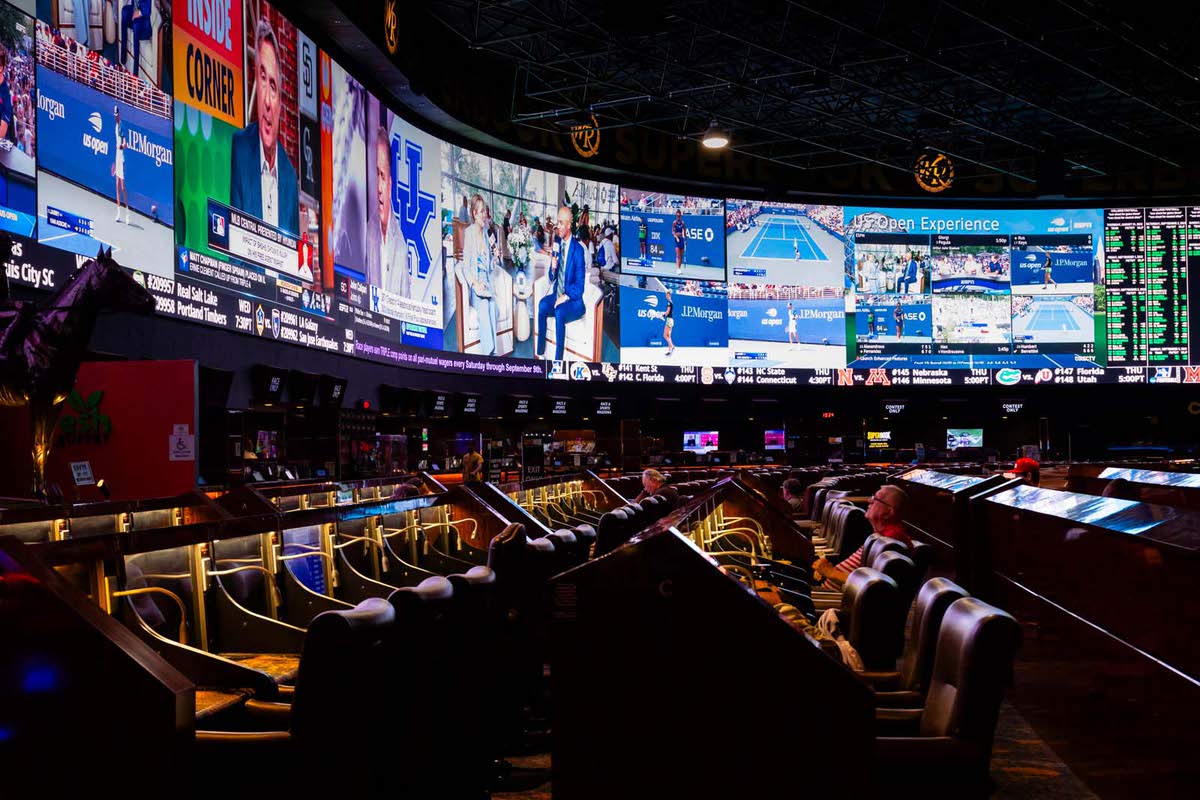

Super Bowl 60: A Shift in the Betting Landscape
Editor’s Note: This article is translated into Spanish.
On February 15, 2026, the political and gaming landscape in Nevada is evolving as state authorities take steps to regulate a prominent competitor to traditional sports betting. The recent Super Bowl 60, featuring a tightly contested rematch between the Seattle Seahawks and New England Patriots, drew an astounding peak viewership of approximately 137.8 million—an unprecedented figure in U.S. television history. However, this cultural phenomenon did not translate into the expected revenue for Nevada’s sportsbooks, which reported an alarming low of around $133.8 million in bets, marking the lowest Super Bowl handle seen in nearly a decade.
The Rise of Prediction Markets
While Nevada’s traditional sportsbooks may be struggling, an entirely different betting environment is thriving: prediction markets. Platforms like Kalshi and Polymarket have seen substantial growth, with Kalshi reporting a staggering 2,700% increase in trading volume related to Super Bowl contracts, surpassing $1 billion. These markets allow users to buy and sell contracts that predict the outcomes of events, with prices adjusting based on perceived probabilities. For example, a buyer may purchase a contract implying a 60% chance of a Seahawks victory, earning profits upon a successful outcome.
Supporters of prediction markets argue that they represent a new frontier for financial speculation rather than traditional gambling. Kalshi’s CEO, Tarek Mansour, argued that if prediction markets are defined as gambling, then one must reconsider the very essence of financial markets.
Regulatory Pushback in Nevada
Despite the appeal of prediction markets, they face significant hurdles within Nevada. A state judge recently temporarily banned Polymarket from operating in the state. The Nevada Gaming Control Board and Attorney General are actively pursuing actions against Kalshi, labeling its sports-related offerings as unlicensed gambling. MGM Resorts International’s CEO Bill Hornbuckle succinctly characterized these markets as sports betting, a perspective shared by most gaming stakeholders in Nevada.
Political Implications and Legislative Actions
The legislative landscape also reflects growing concerns about the emergence of prediction markets. U.S. Representative Dina Titus, whose district encompasses the Las Vegas Strip, has proposed the Fair Markets and Sports Integrity Act aimed at banning these markets at the federal level. In her view, stating that predicting the number of touchdowns is not a bet defies logic. The Nevada Resort Association supports this sentiment, arguing that these prediction products are functionally identical to regulated sports bets that contribute to state tax revenues.
Titus emphasizes the potential economic repercussions of unregulated prediction markets, suggesting that they could deprive essential state services—such as education—of much-needed funding. The fallout could also impact employment within Nevada’s vast gaming industry.
Disputes and Consumer Protection Issues
A notable concern surrounding prediction markets involves consumer protections. Unlike traditional sportsbooks, which are overseen by regulatory bodies, prediction markets lack a structured complaint resolution system. For instance, during the recent Super Bowl, both Kalshi and Polymarket offered contracts concerning a surprise halftime performance. Discrepancies in resolving these markets raised questions about accountability and transparency.
Future of Prediction Markets
Despite ongoing challenges in Nevada, prediction markets are flourishing elsewhere. Analysts suggest that many users, particularly in states without legal sports betting, find these platforms more accessible than traditional sportsbooks. Kalshi represents a user-friendly alternative that allows individuals to engage in predictive trading without the constraints of geographic limitations.
Even with trade associations raising alarms, prominent sports betting platforms like DraftKings and FanDuel have started their own prediction-style offerings, indicating a shifting attitude toward this emerging market.
Regulatory Landscape Under the New Administration
The regulatory backdrop is changing under current leadership. After President Biden’s administration attempted to restrict event contracts, Kalshi successfully contested this, laying the groundwork for broader acceptance of prediction markets. With President Trump’s influence re-emerging, the groundwork for sports event markets is reorganizing. As the CFTC becomes more amenable to regulation, the lines continue to blur between traditional betting and prediction markets.
The Next Steps
The fate of prediction markets is in flux, with discussions not merely limited to state versus platforms but evolving into a complex legal and regulatory debate. The courts are wrestling with the implications of the Dodd-Frank Act and its applicability to these markets.
As these discussions evolve, stakeholders are left to wonder whether prediction markets will ultimately reshape or coexist alongside traditional sports betting in Las Vegas, a city long considered the epicenter of gaming in the United States.