
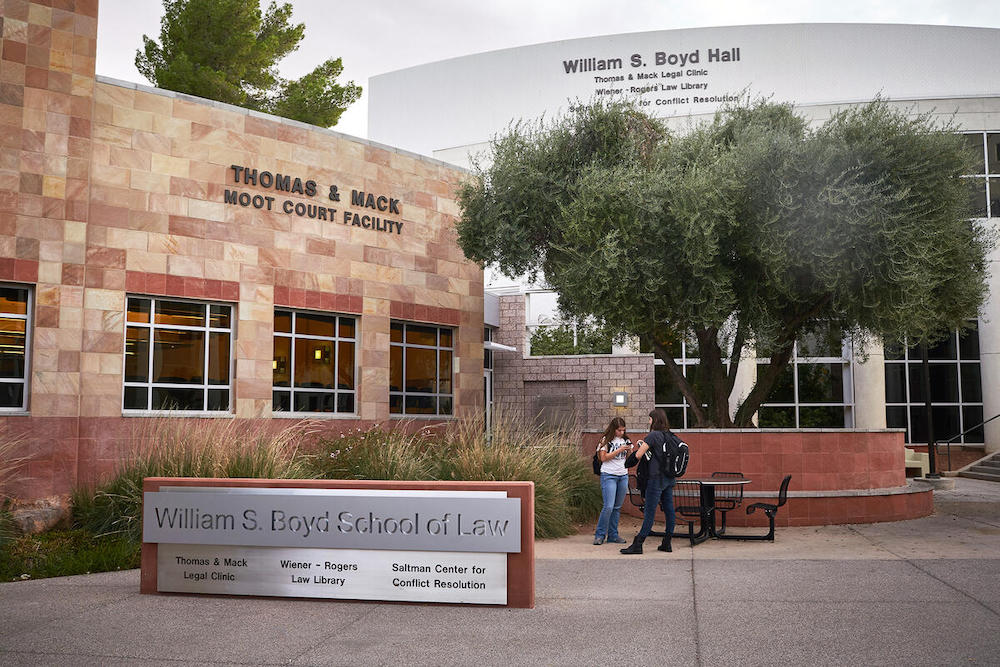

Expanding Legal Horizons: The William S. Boyd School of Law and the Tribal Leadership Council Launch Groundbreaking Scholarship
In a collaborative effort to strengthen the Native legal profession, the William S. Boyd School of Law at the University of Nevada, Las Vegas (UNLV) has joined forces with the Tribal Leadership Council. Together, they have launched a pioneering endowed scholarship specifically designed to increase the representation of Native attorneys in the legal field. This initiative stands out as the first endowment of its kind created by a Native nonprofit at a law school, marking a significant milestone in the realm of Indigenous legal education.
The Tribal Leadership Council Endowment
The newly established Tribal Leadership Council Endowment aims to provide financial support to citizens of federally recognized tribes who are pursuing a Juris Doctor degree. This scholarship will be especially beneficial for students involved in the Indian Nations Gaming and Governance (INGG) program, a specialized initiative at the Boyd School of Law. This program was designed to develop in-depth legal and policy expertise in areas that are crucial to the success of tribal communities, including gaming, governance, and economic development.
While the scholarship will only be awarded once the endowment reaches maturity through further contributions, the impact it promises is profound. By facilitating access to higher legal education, the endowment aspires to create a future where Native voices are more prominent within the legal system.
The Vision Behind the INGG Program
Launched in 2020 with essential support from the San Manuel Band of Mission Indians, the Indian Nations Gaming and Governance program serves as a cornerstone of UNLV’s approach to building legal expertise in Indian Country. This initiative aims to address the complex regulatory and governance issues that tribes face today, helping them navigate the intricacies of sovereignty, business operations, and regulatory landscapes.
Danielle Finn, director of the INGG program, emphasized the transformative potential of expanding access to legal education for tribal citizens. In her statement, she noted that such educational opportunities have ripple effects that extend far beyond individual careers. They contribute to the strengthening of institutions, support families, and foster long-term capacity-building for tribal nations, empowering them to govern effectively and grow their economies sustainably.
Strengthening Self-Determination Through Education
The collaboration between the Boyd School of Law and the Tribal Leadership Council is not an isolated initiative; it signifies a growing partnership aimed at enhancing legal education focused on tribal sovereignty and economic leadership. Justin Barrett, president of the Tribal Leadership Council, articulated the long-term vision of this investment as one that seeks to fortify self-determination for tribal communities. By expanding access to legal education, the scholarship empowers tribal citizens, enabling them to navigate and influence the legal frameworks that affect their communities.
A Call for Contributions
To accelerate the realization of the scholarship fund and its benefits, organizers are actively seeking additional contributions. The broader goal is to enhance the scholarship’s capacity to support more Native students pursuing legal education through the INGG program. With increased funding, the potential to transform lives and strengthen tribal governance becomes a shared investment in a more equitable future for Indigenous communities.
As the partnership between the William S. Boyd School of Law and the Tribal Leadership Council evolves, it holds promise for an enriched pipeline of Native attorneys who will advocate for their communities and contribute to the evolution of legal practices enriching Indian Country.
Through initiatives like the Tribal Leadership Council Endowment, the landscape of legal education for Native citizens is poised for a transformative shift, fostering future leaders who will enhance the legal and governance capacity of their tribes.