
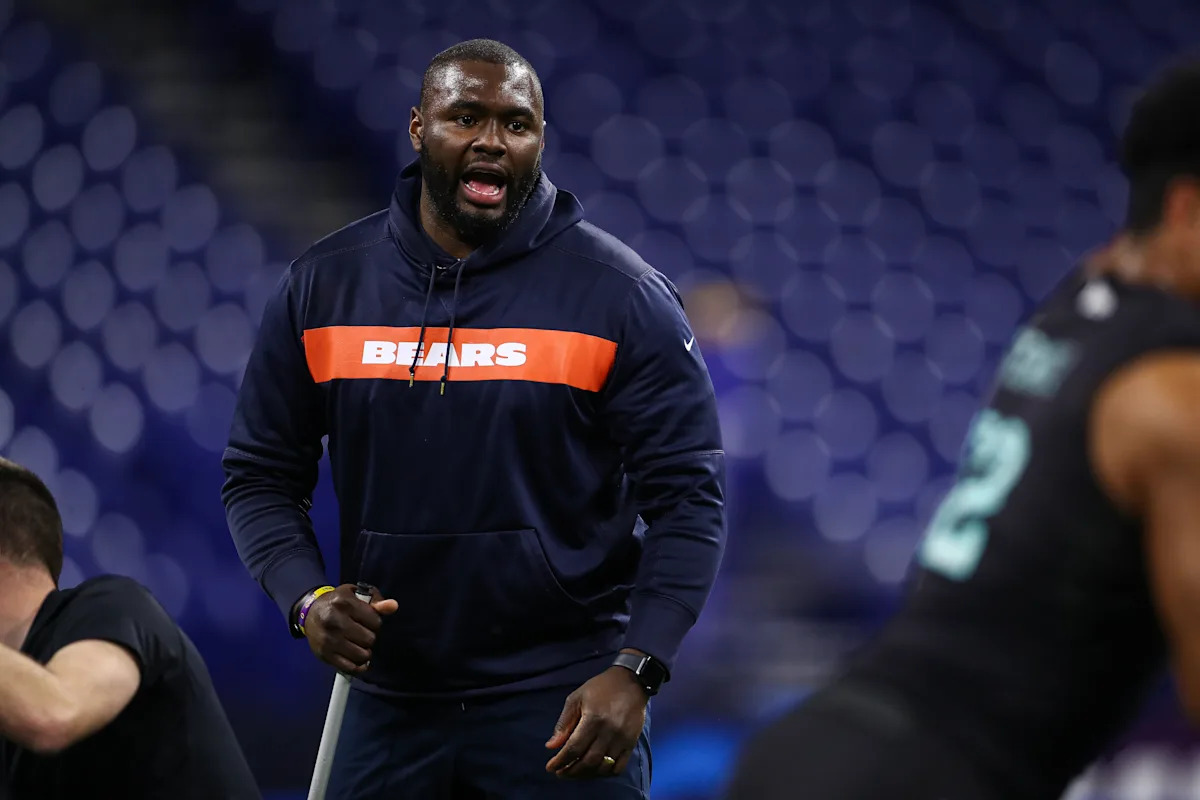

Behind the Sidelines: The Journey of a Linebackers Coach
The Role at Hand: Linebackers Coach
Transitioning into a Linebackers Coach role in the NFL isn’t just a step up; it’s a testament to years of hard work, dedication, and a keen understanding of the game. For Williams, who recently served as the Assistant Linebackers Coach for the Philadelphia Eagles, becoming a linebackers coach represents not just a new title, but an opportunity to shape young talents into tomorrow’s stars.
Career Beginnings: Laying the Groundwork
Williams, now 34, embarked on his coaching journey shortly after completing a successful playing career at West Chester University. During his four seasons, he logged an impressive 376 tackles, 27 tackles for loss (TFL), 5 interceptions (INT), and 10 passes defended (PBU). An eye-catching start, he graduated in 2014 and quickly transitioned to coaching as the linebackers coach at Widener University in 2016.
Climbing the Ranks: Key Coaching Experiences
Transition to NCAA: Temple Owls (2017-2018)
Williams quickly made a name for himself at Temple University, where he worked as a grad assistant for linebackers under Geoff Collins. Contributing to the development of standout players like Shaun Bradley and Chapelle Russell, he honed his skills while collaborating with esteemed coaches such as Taver Johnson and Andrew Thacker. His tenure reflected a commitment to player development and tactical understanding, launching several players into the NFL.
The NFL Leap: Chicago Bears (2019-2022)
In 2019, Williams secured a role with the Chicago Bears, where he further established his coaching prowess under a diverse array of coaches, including Chuck Pagano and Sean Desai. Under his guidance, linebacker Roquan Smith emerged as a force, tallying impressive stats and earning All-Pro honors across multiple seasons. Williams contributed to an environment where linebackers not only performed but thrived, showcasing their skills in a competitive league.
Philadelphia Eagles: First Forays into the NFL
Starting in 2023, Williams joined the Philadelphia Eagles, initially working with nickel corners and linebackers. His leadership quickly emerged as vital, with players like Kevin Byard and Bradley Roby making waves under his direction, displaying an impressive combination of defensive acumen and execution in critical game situations.
Coaching Philosophy: A Commitment to Excellence
Williams’s coaching philosophy can be summed up in one word: aggressive. He values a downhill approach, promoting a relentless pursuit of the football and an emphasis on tackling fundamentals. His philosophy integrates meticulous attention to detail, ensuring that every player under his tutelage understands their role within the larger defensive scheme. With a strong focus on run defense, blitz packages, and a commitment to special teams, his coaching style emphasizes making plays that impact the game.
Player Development: A Track Record of Success
Williams’s track record speaks volumes. He’s not just focused on individual players but aims to foster a culture of excellence throughout his units. Notable successes include:
- Roquan Smith: Achieving All-Pro status multiple times during his time with the Bears, Smith became a pillar of defensive strength.
- Zack Baun: Under Williams’s guidance, Baun transitioned from EDGE to off-ball linebacker, earning All-Pro honors himself.
- Nakobe Dean: Emerging as a vital player for the Eagles, Dean’s performances have drawn attention, showcasing Williams’s impact on player development.
Future Prospects: Who to Watch
Looking ahead, several players are poised for significant developments under Williams’s tutelage. Nakobe Dean stands out as a player likely to consider his future beyond Philadelphia, potentially making a move that could reshape his career trajectory. Equally, Josh Jobe and Jaelan Phillips are names to keep an eye on, especially with shifts in player contracts and potential free agency. Their connections to Williams may signal possibilities for team transitions.
Building Connections: The Network Effect
Williams’s journey illustrates the importance of building connections within coaching circles. Working alongside various coaching staffs has allowed him to cultivate an expansive network. This network not only supports player development but also creates opportunities for professional growth, enhancing his ability to impact the game on a broader scale.
In sum, the trajectory of Williams’s career offers a glimpse into the multifaceted responsibilities of a linebackers coach in the NFL. With a foundation built on success at both collegiate and professional levels, he is well-poised to influence the next generation of linebacking talent, making strides in player development while strategically impacting the game’s defensive schemes.