
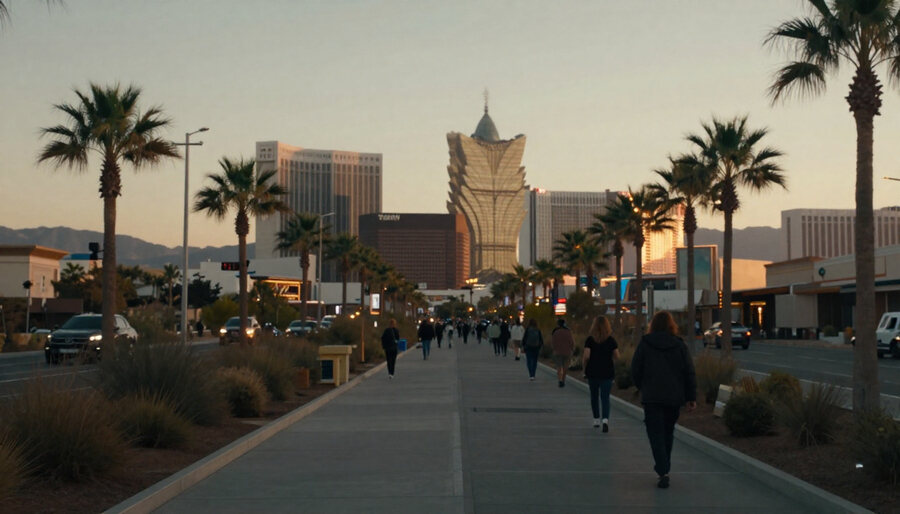

Las Vegas Tourism Struggles to Regain Momentum in 2025
Las Vegas, the entertainment capital of the world, is facing significant challenges as it grapples with a notable decline in tourism. In 2025, the city welcomed just 35.46 million visitors through November, a staggering 7.4% drop from the previous year. This decrease has brought visitor numbers down to levels not seen in nearly two decades, marking a concerning trend for a city that has historically relied on tourism as a critical pillar of its economy.
Tourist Numbers and Hotel Performance
The decline in visitor numbers is vividly reflected in hotel performance data. Average hotel occupancy rates have dipped to 80.7%, with average room rates standing at $183.51 per night. The convention sector, which often serves as a backbone for Las Vegas’s tourism model, attracted only 5.68 million participants last year, indicating that both leisure and business travel segments are showing signs of stress. This downturn has reverberated throughout the city’s hospitality ecosystem, impacting resorts, restaurants, retail outlets, and various attractions.
The Impact of International Tourism
One of the primary drivers of this decline is the downturn in international tourism. In 2025, Las Vegas received just under 240,000 international travelers, a dramatic drop from over 300,000 the previous year. While domestic travel has remained somewhat steady, the city has historically depended heavily on international visitors, who generally spend more on accommodations, dining, shopping, and entertainment. These overseas travelers are a vital cog in the economic wheel, and their absence has significantly exacerbated the overall slowdown.
Factors such as economic uncertainty, currency fluctuations, and shifting travel priorities have played a crucial role in shaping international visitation patterns. Additionally, changes in visa requirements and evolving travel regulations have created further barriers to entry for potential visitors, revealing vulnerabilities in Las Vegas’s tourism-dependent model.
Broader Economic Implications
The ramifications of declining tourism extend far beyond hotel occupancy rates. Las Vegas’s economy is intricately woven with its tourism sector, and the downturn has felt like a ripple effect across multiple industries. Hotels, casinos, and restaurants—corners of the economy that rely heavily on visitor spending—now face mounting pressure to boost occupancy and revenue. Retail outlets, too, find themselves feeling the pinch, as a decline in tourists directly correlates to reduced sales.
Smaller businesses, which often rely on international tourism for a significant portion of their revenue, are particularly susceptible to these shifts in visitor patterns. This interconnected nature of Las Vegas’s economy highlights how fluctuations in tourism can have profound effects on employment, transportation services, and the overall atmosphere of the city’s hospitality sector.
Historical Context: The Pre-Pandemic Boom
Comparing current figures to pre-pandemic levels reveals just how far Las Vegas has to go to regain its former glory. In 2019, the city welcomed a record-breaking 42.52 million visitors—nearly seven million more than in 2025. While the domestic market has shown signs of recovery, international tourism continues to lag. Global economic trends, logistical barriers, and changing traveler expectations have collectively conspired to hinder the return of overseas visitors.
This gap throws into sharp relief the difficulties Las Vegas faces in reviving its tourism sector. Despite the resilience provided by domestic travelers, the absence of high-spending international guests creates a noticeable void, emphasizing the need for diversification and innovative solutions.
Potential for Recovery and Strategic Growth
Despite the current challenges, there are promising avenues for Las Vegas to reclaim its tourism crown. The city boasts unparalleled entertainment options, luxury accommodations, and state-of-the-art convention facilities. Formulating targeted marketing campaigns, collaborating with travel operators and airlines, and developing international promotions could help attract lucrative travelers.
Emerging tourism markets in Asia, Latin America, and the Middle East present unique opportunities for diversification. By shifting the focus towards experiential travel, sustainable tourism, and luxury offerings, Las Vegas can draw in new audiences while reducing reliance on traditional markets. Additionally, enhancing conventions, cultural events, and unique entertainment experiences could attract high-spending visitors, helping to reinvigorate the economy.
Innovation as a Cornerstone for Recovery
Going forward, innovation and adaptability are key to regaining momentum in tourism. Expanding outreach efforts, harnessing digital engagement, and crafting experiences tailored to contemporary travel trends will fortify Las Vegas’s status as a global tourism hub. By offering distinct and memorable experiences, the city can not only aim to recover lost visitors but also appeal to a broader demographic, ensuring a more resilient tourism landscape.
As the city continues to navigate these turbulent waters, it stands at a crossroads. With focused strategies and a commitment to embracing emerging trends, Las Vegas has the potential to not just recover but thrive, reaffirming its position as a premier destination for leisure and business travelers alike.