

In a landscape marked by economic volatility, Nevada stands at a fascinating crossroads. Brian Gordon, a research analyst from Las Vegas, argues that despite the ongoing challenges, there is potential for renewed optimism and opportunity in the market. During the recent State of the Economy address hosted by the Economic Development Authority of Western Nevada (EDAWN), a record turnout of nearly 1,600 participants contributed to a vibrant discussion about the state’s economic future, held at the Peppermill Resort Spa Casino in Reno.
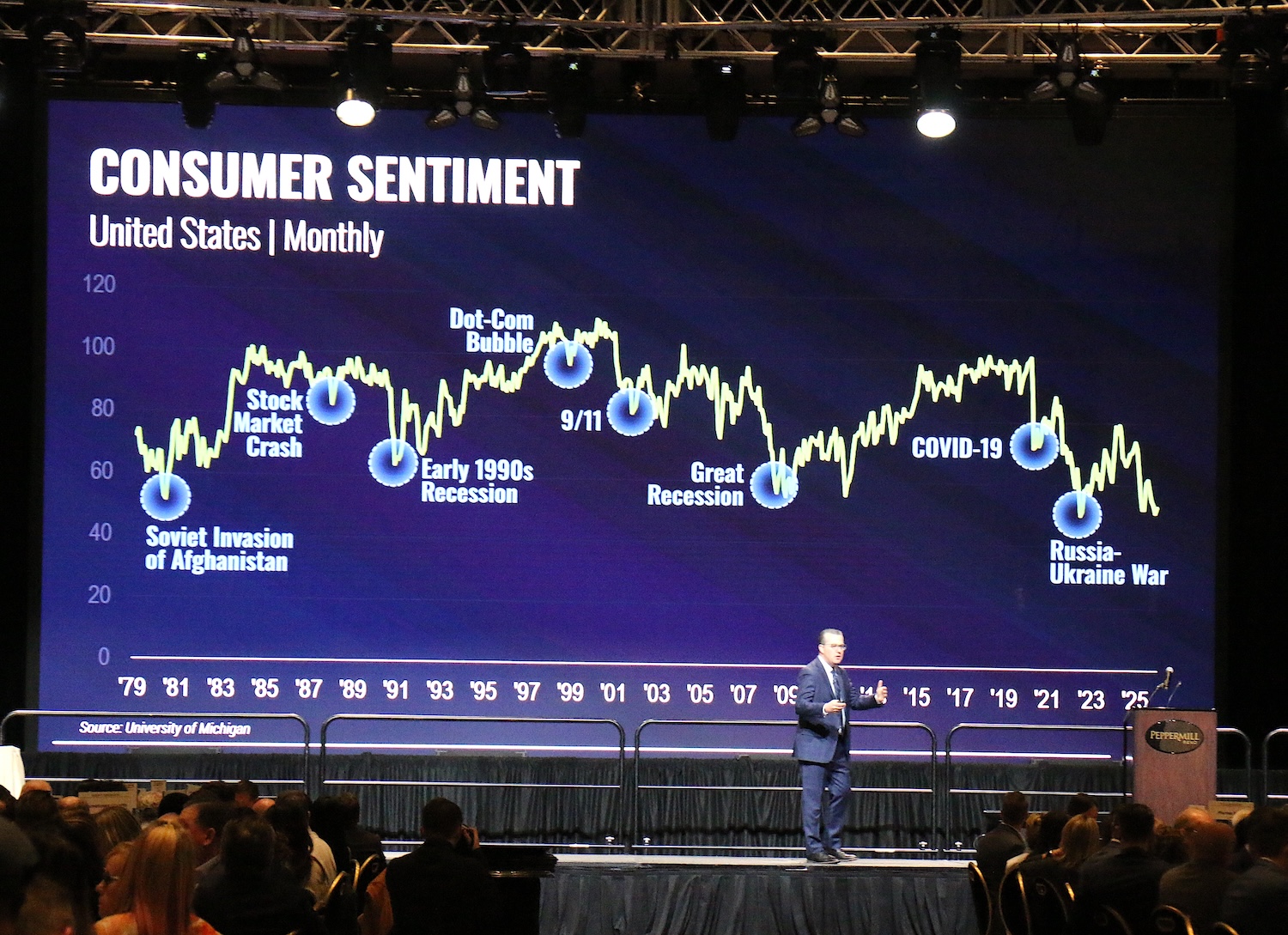
Gordon, from Applied Analysis, shed light on a striking disparity between consumer sentiment and observable market indicators. In simple terms, while households may feel the pinch, the underlying economic metrics tell a more complex story. A family of four needs an income of approximately $238,500 to maintain a comfortable lifestyle in Nevada. However, the current median household income hovers around just $92,000, a fact that raises questions about affordability, especially as the costs of groceries and housing continue to climb. This disconnect fuels a climate of uncertainty among residents.
The housing market, in particular, is a significant concern. Gordon highlighted that both first-time and experienced homebuyers are facing hurdles in securing properties. With the median closing price for new homes projected at about $593,000 in 2025, the strain on potential buyers is palpable. Approximately 60% of existing mortgages are locked in at rates between 3% and 6%. As borrowing costs rise, many consumers find themselves reluctant to move, leading to a lack of mobility in the market.
Interestingly, the potential for new housing development appears limited. Much of the land available for development is federally owned, or its terrain proves unsuitable for construction, which is inflating land prices further. “There is not a lot of opportunity for future development out into the community,” Gordon pointed out. Beyond land availability, the costs of materials and labor are already high, compounding challenges for builders seeking to meet market demands.
Looking toward business construction, Gordon projects robust growth in data center developments, with approximately 3,900 new centers anticipated across the United States. Northern Nevada is set to experience a staggering 953% increase in capacity to invest in or expand data hub infrastructures. The total cost associated with planned projects in Northern Nevada is estimated at $26 billion, indicating significant, albeit cautious, optimism about future economic activity.
Employment trends present another layer of complexity. While the prevailing sentiment might be doom and gloom—characterized by concerns over job loss and corporate layoffs—Gordon maintains that the reality is far less dire. Companies are adapting to shifting labor dynamics, actively looking to hire older demographics as the median age of the U.S. labor force rises beyond 42 years by the end of 2025. While many industries like information technology and utilities face skill shortages, there is no shortage of people in the state—only a mismatch in skills.
To bridge this gap, Gordon advocates for robust partnerships between local educational institutions and industry leaders, such as Tesla and Truckee Meadows Community College. These collaborations are crucial for preparing the workforce for existing and emerging opportunities.
The past year has undoubtedly reshaped perceptions of a healthy economy for many Americans, yet Gordon emphasizes that perceptions do not always align with reality. He insists, “We’re still better off than where we were. We are on a much more stable path than before.” Such statements serve to inject a dose of realism into the discussion, challenging residents to look beyond the headlines.
EDAWN President and CEO Taylor Adams echoed this sentiment, noting that the organization had secured 275 qualified leads in the past year, resulting in 11 company relocations and four expansions, translating into a projected investment of $534 million and about 593 new jobs at an average salary of $76,800. “We continue to be the little engine that could,” Adams stated, highlighting the community’s resilience and proactive approach to growth.
EDAWN’s innovative Business Builders program has played a pivotal role in enhancing retention and expansion efforts, facilitating 39 visits to support regional strategies. Additionally, the organization has helped nurture 348 new startups, with 41 adding over 100 new jobs and 20 raising approximately $555 million in capital. This vibrant entrepreneurial ecosystem demonstrates Northern Nevada’s potential for growth and opportunity.
The excitement surrounding events like Reno Startup Week—boasting a 40% boost in attendance and increasing diversity among participants—illustrates the thriving entrepreneurial spirit in the region. With a significant portion of the attendees identifying as women or Hispanic and Latino, the event has become integral to the local economic landscape. “It’s part of the infrastructure that keeps Northern Nevada’s entrepreneurial pipeline active, resilient, and growing,” Adams affirmed, emphasizing the importance of community support in fostering business success.
Looking ahead, Adams notified attendees of an impending rebrand for EDAWN, in partnership with the Abbi Agency, to refresh its marketing strategy. He encourages the idea that American entrepreneurship and innovation are critical in shaping a future that welcomes individuals from all backgrounds and aspirations. “America was not built by spectators, but by startups, people with ideas, grit, and the courage to act,” he declared, rallying support for a collaborative future.
Mike Kazmierski, director of the Reno nonprofit Strengthen our Community, capped off the conversation with a poignant observation about community evolution. In just over a decade, the State of the Economy address has grown from a modest audience of 200 to a remarkable 1,600. “The community cares,” he remarked, urging attendees to focus on local developments instead of being swayed by negative media portrayals. “Look at what’s happening in our community. We’re continuing to grow, and great things are happening.”