

The Cultural Phenomenon of the Super Bowl Halftime Show
Every Super Bowl, over a hundred million viewers tune in to witness a sporting event like no other. But somewhere between touchdowns and timeouts, the stadium transforms into the world’s biggest stage. For 13 to 15 minutes, music takes over, creating moments that resonate long after the final whistle. The halftime show is more than just a performance; it’s a cultural showcase, a celebration of identity, and a chance for artists to connect with a global audience.
Bad Bunny (2026): A Celebration of Culture
Bad Bunny’s performance in 2026 was a vibrant celebration of Puerto Rican culture on one of the most watched stages in the world. He seamlessly blended reggaeton, Latin trap, and Caribbean rhythms, transforming the field into a lively island festival. The production featured traditional percussion instruments, bomba-inspired choreography, and visuals that paid homage to Puerto Rico’s rich landscapes and heritage. Dancers filled the field with fluid formations, while surprise collaborators amplified the sense of community. This performance exemplified how the Super Bowl halftime show has evolved into a global platform where identity, language, and culture take center stage.
Kendrick Lamar (2025): Lyrical Gravity Meets Visual Impact
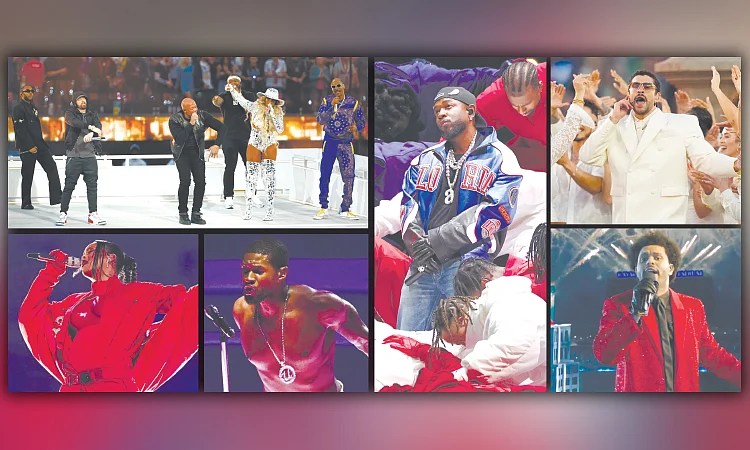
In 2025, Kendrick Lamar showcased his unique blend of style and substance. Dressed in a Martine Rose varsity jacket and flared Celine jeans, he used fashion as a storytelling device. The visuals featured dancers with sharp, bob styles moving in synchronized patterns, creating a militant yet artistic aesthetic. Each movement was deliberate, adding layers to his performance that went beyond mere entertainment. Kendrick doesn’t just perform songs; he stages statements, proving that rap can be cerebral and stadium-ready — a combination that captivated the audience and made a lasting impact.
Usher (2024): The Essence of R&B Performance
Usher lit up the 2024 halftime show, channeling the energy of his Las Vegas residency. His performance was packed with dynamic movement, including roller-skating sequences and high-octane choreography, highlighting why he is considered one of R&B’s greatest performers. Seamlessly transitioning between hits like “Yeah!” and “Burn,” Usher kept the audience engaged with an electric atmosphere. Surprise appearances from stars like Alicia Keys and Lil Jon transformed it into a full-blown celebration of early-2000s nostalgia, reminding fans of the precision, stamina, and charisma needed to excel on such a prestigious platform.
Rihanna (2023): Monumental and Effortless
In 2023, Rihanna delivered a performance that was both effortless and monumental, all while visibly pregnant. Elevated on LED-lit platforms, she opened with “Bitch Better Have My Money,” moving through a tight selection of hits like “Umbrella” and “Diamonds.” The choreography was memorable, marked by hard-hitting, street-dance influences. Her dancers, adorned in oversized white puffer suits, became integral to the show, embodying energy and precision. Rather than cluttering the stage with excessive guests, Rihanna focused on her presence, turning a medley of hits into a powerful statement about her impact on music and culture.
Dr. Dre, Snoop Dogg, Eminem, Mary J. Blige, Kendrick Lamar & 50 Cent (2022): A Hip-Hop Masterclass
The 2022 halftime show was a cultural milestone, featuring a collaboration of generational rap icons. With Dr. Dre seated behind a replica of a Compton home, the staging evoked nostalgia and authenticity. The elaborate setup, complete with house party visuals, served to both celebrate and elevate West Coast rap. Each artist had their own thematic box, reminiscent of isolated performance spaces for a pandemic era, yet together they formed a united front showcasing the artistry and history of hip-hop. The performance was so significant that it later earned the Primetime Emmy Award for Outstanding Variety Special (Live), solidifying its place in history.
The Weeknd (2021): A Haunting Visual Journey
The 2021 halftime show saw The Weeknd create a haunting visual journey, setting the tone with a gospel-infused rendition of “Call Out My Name.” His performance unfolded like a neon-lit Las Vegas strip, richly immersive and aligned with his After Hours album concept. Dressed in his now-iconic red blazer, he captivated the audience with dramatic visuals and precise choreography. The presence of dancers wrapped in facial bandages echoed the unsettling themes of his album, adding depth to the performance. As he closed with “Blinding Lights” and fireworks lit up the sky, viewers were left with a powerful blend of sound, sight, and emotion.
A Cultural Canvas
The Super Bowl halftime show is not merely entertainment; it’s a cultural phenomenon that reflects the world we live in. Each performance becomes instant social media history, meticulously crafted to resonate with audiences while remaining rooted in identity. As we reflect on the last five years, it’s evident that these performances tap into the collective consciousness, celebrating diverse musical styles and cultural backgrounds, making the halftime show a powerful voice in the global conversation.